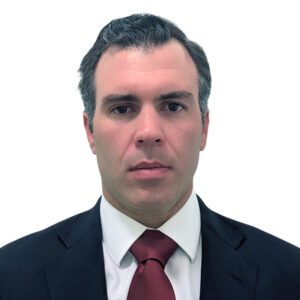
Frank Nieves (b. May 13, 1984) is an American martial artist, researcher, and instructor based in Miami, Florida. He is the founder of the Institute of Budo Studies, an organization dedicated to the transmission of classical Japanese martial arts and their historical contexts. With over three decades of experience across multiple disciplines, Nieves is recognized for his detailed approach to traditional swordsmanship, his commitment to historical preservation, and his contributions to academic and public knowledge of Japanese budō.
Early Life and Martial Foundations
Born in Miami, Florida, Frank Nieves began training in martial arts at the age of five. His early exposure included Goju Ryu karate, taekwondo, and judo, later expanding to aikido and Gracie jiu-jitsu. He started practicing Japanese sword arts such as iaido and kendo by age 9, and by 10, he was already competing in national-level iaido tournaments under the United States Kendo Federation. These early achievements marked the beginning of a lifelong engagement with classical Japanese martial systems.
Formal Education and Study in Japan
In 2003, Nieves moved to Japan to study at the International Budo University (IBU) in Katsuura, where he completed the Budo Specialization Program. There, he trained intensively in kendo, iaido, and judo, while studying martial history, ethics, and education in a formal academic setting.
Returning to the U.S., he completed a Bachelor of Arts in Asian Studies from Florida International University, and later earned a Master of Philosophy in Japanese Studies from the University of Oslo, focusing his thesis on the integration of martial values into Japan’s prewar era educational reforms.
Institute of Budo Studies (Est. 2003)
Founded in 2003 in Miami, the Institute of Budo Studies is Nieves’s primary teaching platform. The dojo focuses on traditional Japanese sword arts such as kendo, iaido, and kobudo, offering students an immersive environment that prioritizes discipline, cultural literacy, and historical understanding.
Structured around classical pedagogy, the institute emphasizes not only physical technique but the ethical and philosophical dimensions of martial practice. Nieves teaches full-time and continues to maintain international ties with instructors and organizations in Japan, Europe, and North America.
Martial Arts Ranks and Certifications
Frank Nieves holds dan rankings in multiple martial traditions:
- 6th dan Kyoshi – Ryushin Shouchi Ryu
- 5th dan – Kendo (All Japan Kendo Federation)
- 5th dan – Iaido (All Japan Kendo Federation)
- 5th dan – Muso Jikiden Eishin Ryu Iaido (IMAF)
- 2nd dan – Taekwondo (Kukkiwon)
- 1st dan – Goju Ryu Karate (IOGKF)
- 1st dan – Judo (Kodokan)
- 1st dan – Aikido (Aikikai)
- Brown Belt – Gracie Jiu-Jitsu
He has represented the Hungarian national iaido team in competition and continues to participate in grading, instructor clinics, and international seminars.
Academic Work and Publications
Nieves’s primary academic interest lies in the intersection of budō, education, and ideology.


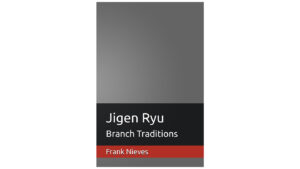
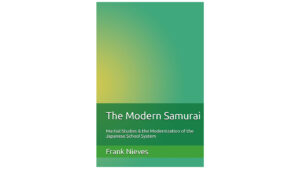
In addition to scholarly writing, he contributes translations and essays on classical Japanese martial texts, bridging practice and historical analysis for English-speaking audiences.
Wikipedia Contributions
Frank Nieves has authored or substantially revised several Wikipedia articles focused on Japanese martial history, making high-quality, source-based information more accessible to practitioners and researchers worldwide. These include:
- Tose Yosazaemon Osamune – Founder of Tenshinshō Jigen Ryū; trained at Katori Shrine and synthesized sword methods with divine inspiration from Kashima Shrine.
- Kaneko Shinkurō Morisada – Second headmaster of Tenshinshō Jigen Ryū; teacher of Zenkitsu.
- Akasaka Yakurō Masatsune (Zenkitsu) – Third headmaster of the style and teacher of Tōgō Shigekata; priest of Tenneiji.
- Tōgō Shigekata – Founder of Jigen Ryū; studied Tenshinshō Jigen Ryū and Taisha Ryū, later synthesizing them into one of Japan’s most powerful kenjutsu systems.
- Ryūshin Shōchi Ryū – A modern sword tradition descended from Tenshinshō Jigen Ryū, formalized in 2006 and led by Yahagi Kunikazu.
- Nakajima Hiroyuki – A contemporary calligrapher and martial artist known for integrating Zen and movement-based calligraphy.
These contributions reflect Nieves’s commitment to accuracy, historical continuity, and scholarly access.
Instructional Philosophy
Frank Nieves approaches teaching with a strong sense of structure and fidelity to tradition. His classes are built on kata (formal patterns), cultural protocols, and deep engagement with martial history. He emphasizes personal responsibility, etiquette, and reflection, viewing budō as a lifelong discipline that shapes both the body and the self.
Cultural Engagement and Community Work
In addition to regular teaching, Nieves has performed demonstrations at cultural institutions such as the Morikami Museum, participated in academic panels and lectures, and organized training exchanges with dojos across Europe, Japan, and the Americas. He remains committed to making traditional budō accessible to serious students while preserving its integrity and context.
Present Day
Frank Nieves continues to direct the Institute of Budo Studies in Miami, where he teaches full-time. He divides his time between instruction, research, and occasional international travel for martial events and workshops. His work reflects a long-term commitment to budō as a discipline that integrates body, mind, and culture.
In an age where martial arts are often commodified or divorced from their roots, Nieves stands out as a traditionalist with a scholarly sensibility. His teaching is quiet, exacting, and rigorous—an approach built on the belief that martial study, at its best, is an education in being human.